Interview: Suda 51 talks Travis Strikes Again, retro game development and The Smiths

Goichi Suda is one of my favourite game designers.

Known better as Suda 51 (51 is ‘go-ichi’ in Japanese), he’s considered by many to be the Quentin Tarantino of video games: notorious for making stylised and offbeat games with a mature subject matter, a dark sense of humour and more references than an over-enthusiastic CV.

Although in recent years he’s given us the likes of Lollipop Chainsaw and Killer Is Dead, Nintendo gamers know Suda better for two of his older offerings: Killer7 on the GameCube, and the No More Heroes games on Wii.

It’s the latter that sees yer man Scullion and yer man 51 making contact once again. I first interviewed Suda more than a decade ago, as part of an Official Nintendo Magazine preview of the first No More Heroes. When its sequel came out in 2010, I caught up with him again for a second interview. Continue reading “Interview: Suda 51 talks Travis Strikes Again, retro game development and The Smiths”
My first Miyamoto interview from 2007

I’ve interviewed a number of game developers and other personalities over the years. Of them all, two stand out as personal favourites: Suda 51 and Shigeru Miyamoto.

I’ll cover my first Suda 51 interview in a later article, but for now let me focus on Miyamoto.

Me and Miyamoto
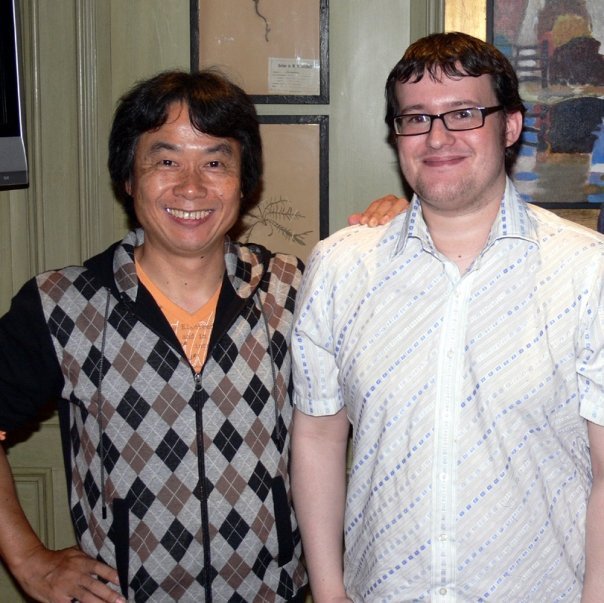
Plot twist: I was wearing trousers, he wasn’t

If you’ve got any sort of gaming knowledge, you know that Miyamoto is, quite simply, the man. If you don’t have any sort of gaming knowledge, I think you’ve ended up here by mistake, probably because you were searching for “Emma Watson upskirt” and Google brought you here because of this sentence. In which case stick around, you sick bastard, you might learn something.

Miyamoto is the single most influential video game creator and developer of all time. People will argue with this. Those people are wrong. Don’t fight them, pity them.

I’ve actually interviewed Miyamoto twice, and both were special for different reasons. The second time was in person, and led to the photo you see above, so naturally it was special for that reason alone: a one-on-one chat with the man whose work shaped my childhood and, ultimately, my career and life. Continue reading “My first Miyamoto interview from 2007”