The first ever review I wrote in my career. They got better
I’d estimate that over the course of the last 11 years I’ve reviewed just short of 1000 games (thanks very much, ONM’s monthly Virtual Console and WiiWare section, for bumping that figure up).
Reviews are arguably the most important aspect of games journalism – at least in the traditional sense – because after the news announcing a game and the previews giving a taste of it, the review is the final verdict: “Now it’s finally with us, and here’s whether you should get it.”
Because of this, one of the questions I get asked most often (other than how to become a games journalist) is how to properly review a game. The answer is one you might not like, because it isn’t a catch-all solution: there’s no ‘proper’ way to review a game. Everyone does it differently and everyone has their own style.
What I can do, however, is try to help by telling you how I do it my way, and hope that by doing so you can maybe pick up some tips to use when developing your own style.
This article was originally published on International Women’s Day 2017.
Although great progress has been made over the years in making women’s voices louder in the games industry, it’s clear that in other ways things are worse than ever.
Hashtag-citing hate groups and angry young men – terrified that their narrow-minded definition of gaming is being challenged – are ensuring that being a woman in the games industry is tough, frustrating and sometimes downright scary.
Obviously, these people are idiots. Ovaries can do a lot of things, but preventing insecure men from playing their precious video games isn’t one of them.
Anyone with a shred of sense in their brain will know that women are just as crucial to the games industry as men are. By trying to drive them out or reducing them to eye candy, you’re quite literally cutting the industry’s potential in half.
This is the only time I’m going to discuss this topic in any great detail. I’d rather Tired Old Hack focused more on games themselves than the bureaucracy that surrounds the way they’re covered, but given that it’s something that’s been a part of my life for a decade I might as well briefly give my take on it before moving on.
I should also make it clear here that if you’re someone who’s followed other gaming websites for a while, very little of this will be news to you. I’m only really writing this because, well, it’s my site and I want to put my opinion on the record, just so I have something to refer back to every time this happens in the future (and it will, many times). Continue reading “Review code, the ‘media’, YouTubers and all that shite”→
In my decade as a games journalist I’ve reviewed nearly 1000 games.
Most of these reviews were written during my six years at Official Nintendo Magazine (ONM), and most of these were small ones – indie titles, WiiWare and eShop games, retro Virtual Console releases and the like. But many were also multi-page reviews of triple-A titles.
One of the questions I’m most often asked is which of these reviews was my favourite. I have two.
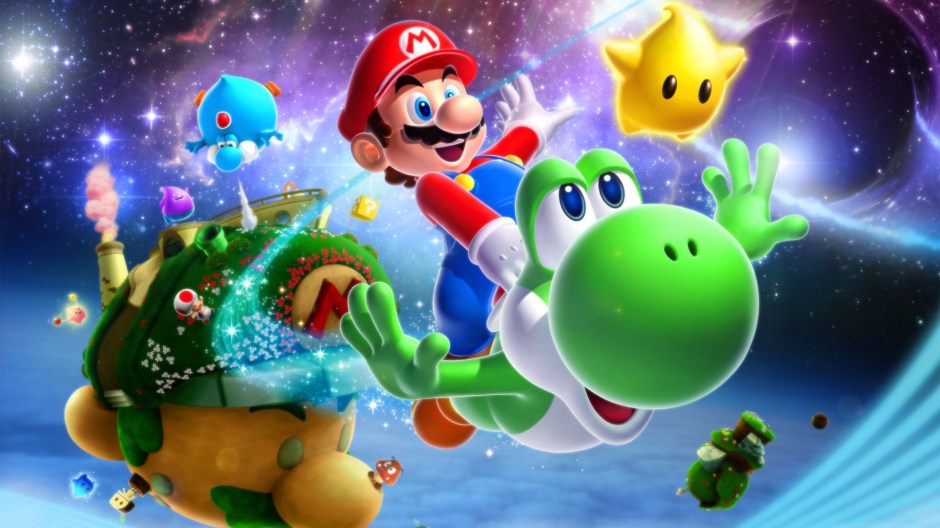
The first is my Super Mario Galaxy review from ONM issue 23 (December 2007) and the second is my Super Mario Galaxy 2 review from ONM issue 56 (June 2010).
Another of the questions I’m asked is how to write a review. There’s no easy answer to this – indeed, there’s no answer at all. Every reviewer has a different style, so there’s no right way to do it.
What I’ve decided to do, though, is take you through my two favourite reviews and give you a little insight into how they were put together.
On 2 May 2006, I joined Official Nintendo Magazine as a Staff Writer.
After a quick glance at my calendar, I have determined that today is therefore my 10th anniversary as a video games journalist (or critic, or writer or whatever you want to call it: I still don’t really know myself).
My first ever ONM review. They got better, honest
Over the past decade I’ve loved every minute of working for ONM, then Nintendo Gamer, then CVG and finally as a freelancer.
And now I’ve got Tired Old Hack, which gives me more freedom to write what I want than I’ve ever had. In short, it’s been a bloody good 10 years.
With that in mind, although games are usually the main focus when I write, I hope you don’t mind if I make today’s article about my own career.
The Games Media Awards (or GMAs for acronym fans) took place last night, and with it came the usual outpouring of moany tweets, mostly from people who weren’t there.
For those not in the know, the GMAs are a UK award ceremony in which some members of Britain’s gaming journalism industry are given little plastic blocks to commemorate their top-notch journalising over the past year.
The Journalism family photo. L-R: Barbara Journalism, Games Journalism, Michael Journalism
Today I’m going to tell you about a person who gets a lot of abuse and criticism on the internet: Games Journalism.
Games Hayden Journalism was born in Portland, Oregon in 1979. Its parents, Barbara and Michael Journalism, could tell that at a very young age Games was destined for big things.
Games played its first video game at an early age, and was so blown away by what it witnessed that it decided to dedicate its life to preaching the good word of gaming to others.
At the time, the best way to reach these audiences was through print. So, a young Games Journalism released numerous magazines, charging gamers a small fee to find out about the latest games. Continue reading “Games Journalism: That Prick”→
Bear with me here, things are going to get a bit rambly and train-of-thoughty. Yes, it’s a phrase.
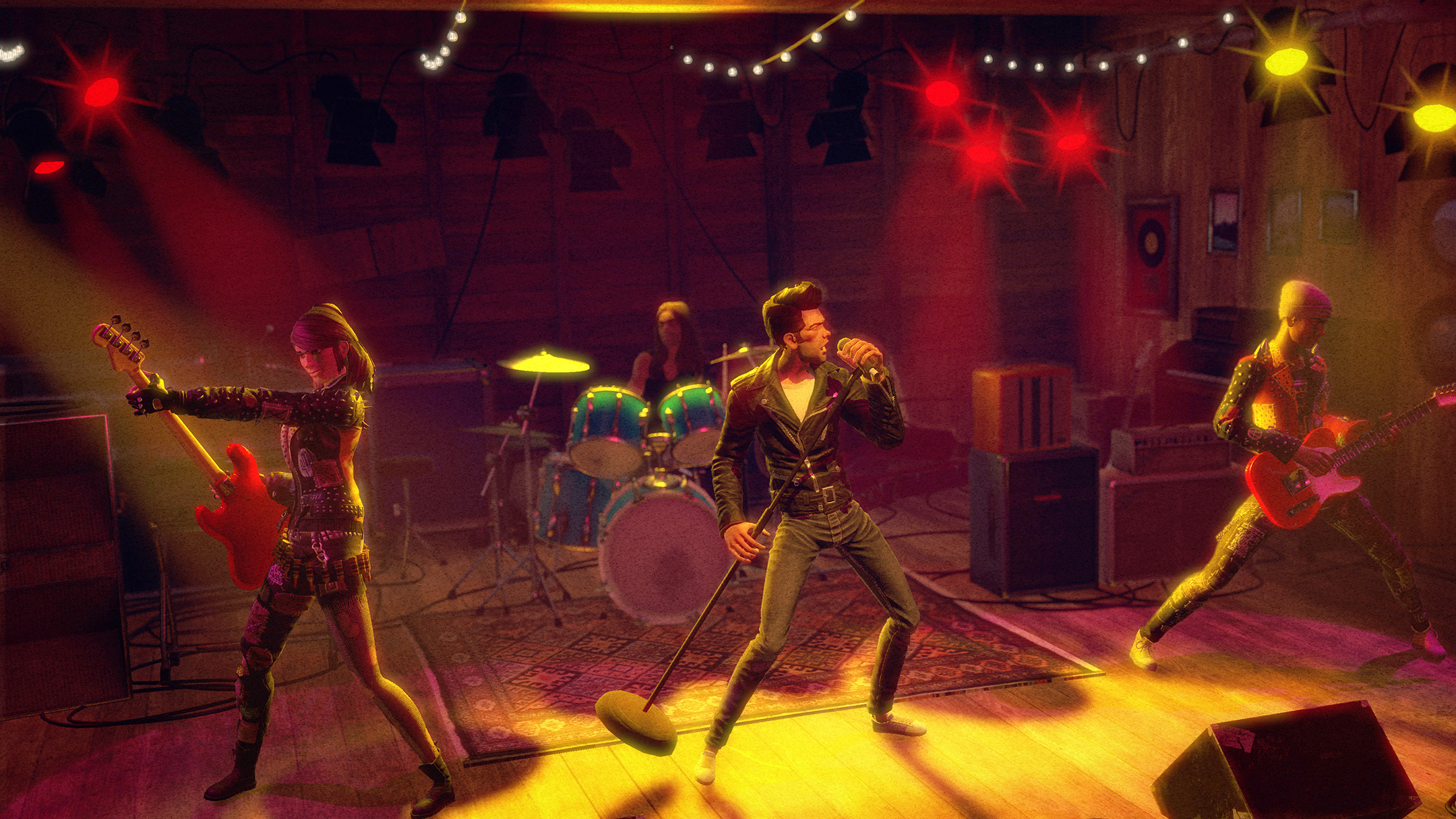
This morning I went to a Rock Band 4 press event, where I got to try out the game.
I wrote up this preview article detailing my thoughts. Long story short, my opinion was that at this stage it didn’t seem to be revolutionising things by any means, but that was fine because it was still Rock Band and that’s good enough for me.
Contrary to popular belief, it’s completely fine to be negative in a preview. Some believe that publications are scared to badmouth a game at preview stage because they might be denied review code, but as long as the publication is fair about it then publishers are actually usually okay with it. Continue reading “An open letter to journalists who don’t give a shit”→
To some games journalists, ‘list’ is a dirty word.
Much like some people feel puns are the worst things ever created by the human race (though I personally think they’re punderful), there are those who believe list features should be taken round the back and shot in the heart.
Fuck off with your clickbait, mate
I can understand why some would feel this way. There was a time, back in the late ’80s and early ’90s, when a list feature in a games magazine felt like a special event, a lovely break from the usual ‘news, letters, previews, reviews, tips’ structure most mags followed.
These days, however, they’re considered too ‘easy’, with the likes of Buzzfeed milking them to saturation point and turning a once-loved article style into something loathed by many writers.
Not me, though. And to explain why, I’ve put together this list of eight things I want to say about list features.
You see what I’ve done there? I’ve made a list feature about list features. I’m so clever. Stephen Hawking actually has a restraining order out on me, in case I come within 500 yards of him and make him look like a big bloody idiot by comparison. Continue reading “8 things I want to say about list features”→
Those of you who were eagerly anticipating the second part of my article on the wonderful world of game reviews probably lost some of that eagerness a while back, seeing as the first part was posted a month ago now.
The reason is a simple one: I was offered a load of freelance work I wasn’t expecting, and as such paying the bills had to take priority. Apologies, then, for the delay.
Either way, back to business. Since part one was posted so long ago, it may be worth checking it out again to give yourself a wee refresher. That said, let’s proceed.
While part one focused more on the (often frustrating) world of embargoes and the journalist / publisher / PR dialogue that goes on surrounding them, this time I’ll be looking at the actual process of writing a review.
So, for the last time for a while, allow me to once again summon my nameless fake interviewer for some mock Q&A goodness.
Aaaah, it’s good to be alive again. Let’s cut to the chase then, Chris: how do I write a review of a video game?
Sorry, but the short answer is there’s no specific way of doing it. If you’re reading this and have started dabbling in writing your own game reviews and are looking for pointers on how to structure them or what to write about, I’m afraid the answer is “you figure out”.
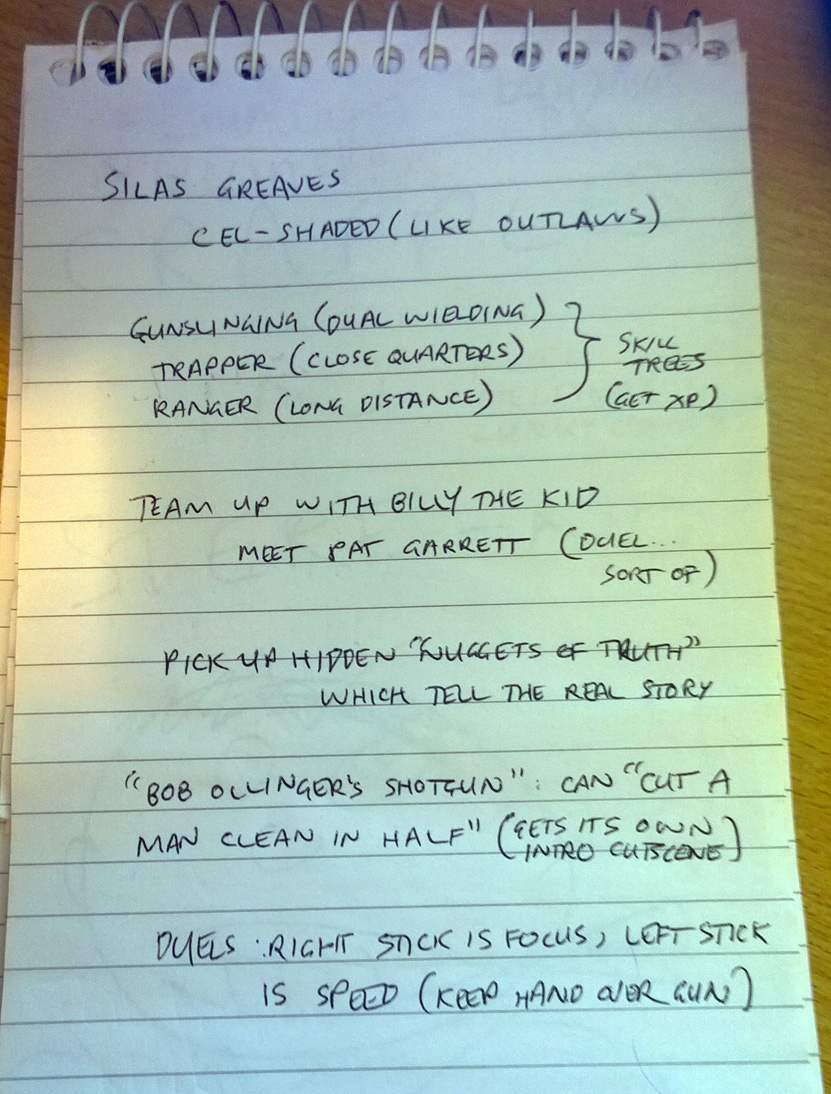
Here’s my note-taking process in action. This is the first page of notes I took while playing Call Of Juarez: Gunslinger, which I ended up not reviewing anyway
There are so many different ways to lay out a review, from the tone to the style of language used, to the aspects of the game you choose to focus on, that I’m simply not arrogant enough to say “here’s how I do it, therefore here’s how you should do it”. You have to develop your own style and experiment with it until it becomes something people enjoy reading.
What I can do is tell you my own review process so you can see how I do it. I’ll stress again though, this isn’t me telling you how to review games.
My own personal process depends entirely on the type of game I’m reviewing. If the game has a linear path and/or a storyline (i.e. a third-person action-adventure game, a platformer or an RPG), I’ll usually just play through it first: always on the default difficulty setting, because that’s what most people will play it on.
While I’m playing, should something strike me as particularly notable, I’ll take a note of it in my notebook. Sometimes these notes are as basic as plot points or character names (so I don’t forget them later), sometimes they’ll be specific thoughts that come into my head (like “these save points are too far apart” or “fuck this frame rate”. Continue reading “The corrupt* world of video games reviews – Part 2”→







 Tired Old Hack