Well, I think it’s fair to say the first Tired Old Hack Game Club was a success. Well over a hundred people joined throughout the course of the month to take part in a Zelda II playthrough, helping each other out along the way.
Many even finished the game for the first time, commenting that were it not for the Game Club they probably wouldn’t have managed it. Which is lovely to hear.
There once was a time, long before the days of the internet, when groups of friends would gather in playgrounds all over the world and discuss the games they were playing.
I grew up having daily lunchtime chats with my pals about the big game of the moment, sharing secrets and offering advice to each other along the way.
I told one of my pals about the warp zone in the whale area in Super Mario Bros 2. He told me how to solve the Deborah Cliff puzzle in Castlevania II (he got it from a magazine: there’s no way we’d have figured it out otherwise).
That sense of camaraderie is still there to an extent these days: when new games are released, they’ll enjoy the spotlight on Twitter for a week or so while people share screenshots and clips of stuff they’ve done.
Retro games, though, no longer get to enjoy this. Because the emphasis these days is on playing the big new games on day one because of the old FOMO issue, anyone trying to discover an old game for the first time will most likely be doing so on their lonesome.
It’s a shame, because older games are often the ones that most need to be discussed with others. In the days before hand-holding was commonplace and many games became about simply running to the next flashing point on your map, 8-bit and 16-bit games were regularly happy to leave you in the dark and make you figure it out yourself.
I miss the days when friends would come together and share their experiences, their advice and their enthusiasm for the purposes of helping each other out, rather than to try and get likes on Twitter. So I’m trying to get those days back.
When I was six my dad came home from work with a new games magazine for me to read.
He’d been doing this for a while – he used to buy ZX Spectrum mags and CVG before I was even born – and now I was old enough to read and very much obsessed with my NES I loved each new issue he’d buy for me.
This one was something else, though. It was bright yellow, was twice the size of normal magazines and was a special edition created by the CVG staff. It was called The Complete Guide To Consoles.
Inside its 124 pages were over 300 reviews, covering “just about every game available on the PC Engine, Mega Drive, Sega, 7800, Coleco and VCS”.
Over the years the CVG team released a further three issues of The Complete Guide To Consoles, each one offering a new batch of reviews.
There were spin-off issues too: The Complete Guide To Sega, for example, covered “every” Master System and Mega Drive game available at the time (though in reality it was missing loads of stuff).
While I always enjoyed reading every magazine my dad brought home, I adored these ones in particular. I was constantly blown away by how many games were in there, and given that the first was released in 1989 – long before the internet was commonplace – they truly felt definitive.
I carried them everywhere I went, read them over and over, knew them cover to cover. By the time the fourth book – covering the likes of the Neo-Geo and Super Famicom – was released, I was old enough to know what I wanted to do when I was older.
Firstly, I wanted to write for a video game magazine: preferably CVG or Nintendo Magazine System, its official Nintendo spin-off.
Secondly, I wanted to write something ‘definitive’ too. Something like The Complete Guide To Consoles, that people would love, read multiple times and cherish like I did with those mags.
The ‘Welcome’ page of The Complete Guide To Consoles, written by my hero Jaz Rignall
Basically, I wanted to follow in the footsteps of my lifetime hero, Julian ‘Jaz’ Rignall. He joined CVG as a staff writer, became editor, then ended up editing The Complete Guide To Consoles too. Jaz was the man, basically, and I wanted to do what he did.
Those of you who know me already know how the first part of my dream went.
I went to university and got my Journalism degree in the hope it would help me get into a games magazine, and sure enough I made it: first as a staff writer (and then games editor) for the Official Nintendo Magazine, then online editor for Nintendo Gamer and finally – completing the dream – as games editor for, yes, CVG in its final years before it was tragically closed down.
I’ve been a games journalist for 12 years now, and have been lucky enough to do the ‘holy trinity’ of working on a magazine full-time, working on a website full-time and working freelance while running my own website. It’s safe to say, then, the first part of my dream – to write about games for a living – has been well and truly ticked off.
This week Nintendo finally announced the first details of its online service coming to Switch in September.
Cunningly titled Nintendo Switch Online, it’s going to come with a number of features for your £17.99 a year, including access to online multiplayer and cloud saves.
Of greater interest to retro fans like me, though, is that Nintendo Switch Online will also come with a library of NES games, with added online multiplayer functionality.
There will be 20 NES games at launch with more to be added, and so far 10 have been revealed.
Not everyone’s a (tired) old prick like me, though, and while some take it for granted that we all know these games off by heart, some younger gamers will be experiencing them for the first time.
After all, while all 10 were on Virtual Console on previous systems, there’s a big difference between willingly paying £4.50 for an old game you’ve never played before and trying it out for ‘free’ because it already comes as part of the subscription you already signed up to so you could play online.
With that in mind, yer man Scullion – NES expert extraordinaire – has put together this video detailing all ten games to bring you up to speed. Enjoy!
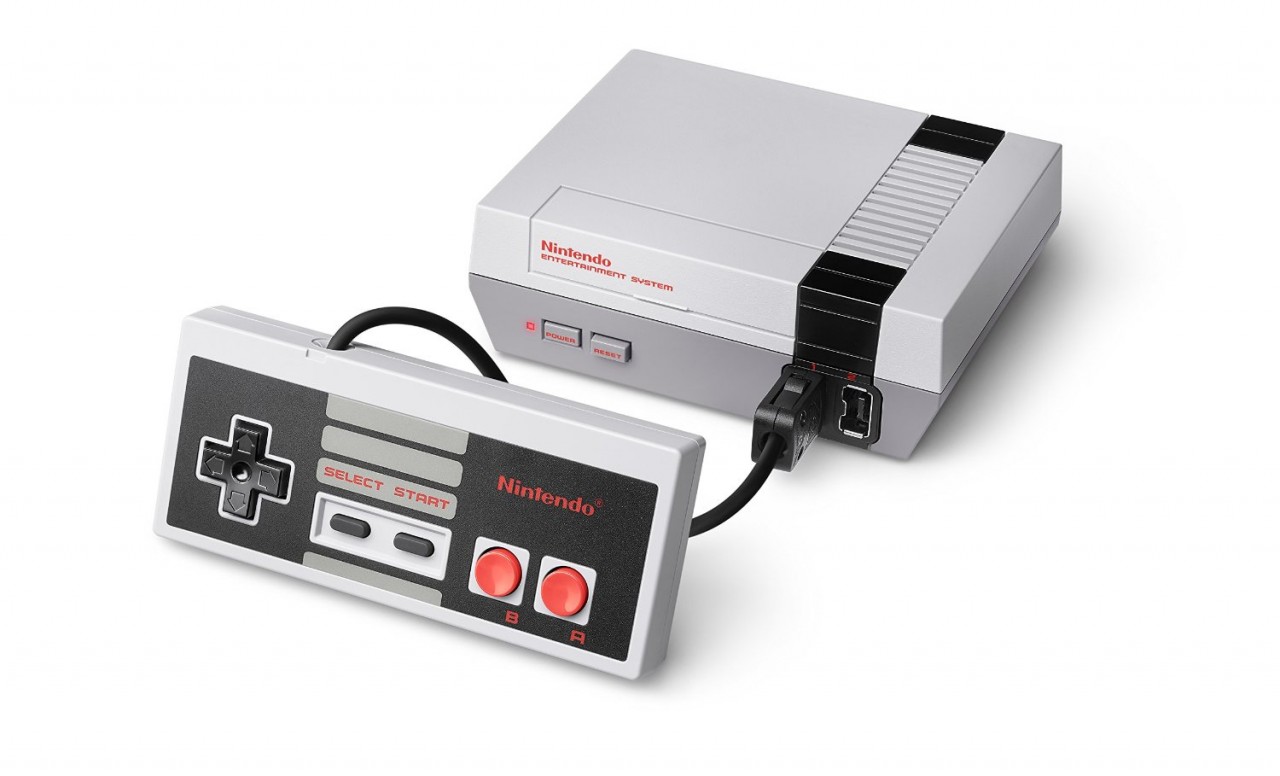
The NES Mini is finally with us, even though that isn’t really what it’s called (it’s the NES Classic Edition in America and the Nintendo Classic Mini NES in Europe).
Over the past couple of weeks you may have seen all manner of YouTubers and website journalists giving their takes on the system. Now, as someone who paid legit cash money for the privilege of having to wait until launch day to get it, it’s my turn.
Cover Me Badd is the first in a regular series looking at the worst video game covers in history. Each article will focus on a specific format. And no, I haven’t misspelled ‘bad’, you pesky youngster.
Hammerin’ Harry isn’t in my list. So that should tell you something
As anyone who’s read my film review site will know, I’m a fan of shite things. If something’s painfully awful I’m right on top of it like white on rice.
One of my favourite examples of this is video game covers. If you know me you know I’m a massive retro gamer and over the years I’ve seen my fair share of terrible game box art, to the extent that I’ve become something of a crap cover connoisseur.
Retro Vault is my video series looking at vintage games from back in the day – both popular ones and those forgotten over time.
The video can be found below, but if you’re more of a reader I’ve provided a modified version of the script after the jump so you can read my thoughts in written form instead.




 Tired Old Hack