Celebrities and video games have always walked hand-in-hand ever since hot tennis prospect Stephen Pong was honoured with an arcade game about his life story. Okay, that’s a lie.
Regardless, there’s nothing quite like seeing a celebrity in a game, especially when their appearance is completely unnecessary.
In honour of these odd inclusions, yer man Scullion has decided to look back at some of the more interesting cameos made by musicians in video games. To be clear though, this list:
• doesn’t count full games based entirely on the musicians in question (that’s for another article), only games that feature them in something other than the sole lead role
• doesn’t count appearances in music games like Guitar Hero, because that isn’t strange
• does count ‘ensemble’ games starring multiple musicians in a non-music environment
Now then, let’s get stuck in.
Michael Jackson in Ready 2 Rumble Boxing 2
The original Ready 2 Rumble Boxing was a surprise hit: launching alongside the Dreamcast, its fantastically detailed character models and fast-paced arcade style boxing made it a joy for early adopters.
The inevitable sequel followed a year later, and decided to up the ante by adding a handful of celebrity characters: some authorised, others not.
The latter consisted of Bill and Hillary Clinton, known simply as Mr President and The First Lady (in the days when you could presumably get away with making a game that let you punch a then 53-year-old woman in the face).
As for the legit appearances, Midway Games decided to enlist two very different celebrities to star as secret boxers: enormous basketball star Shaquille O’Neal and… um, Michael Jackson.

This may have seemed like a surprise, but bear in mind two things: firstly, yer man Jacko was a big gamer, having worked a lot with Sega in the past.
Secondly, this was 2000, and Jackson’s star had lost its shine a tad following the first wave of ‘accusations’ in the mid-90s.
Although he was still a global household name, people weren’t buying his new material so readily, his latest album Blood on the Dancefloor only reached number 24 in the US charts. As such, I’m sure it was easier to get him on board.
Still, I’m sure there are plenty of folk who would have gladly taken the opportunity to punch him square in the jaw, something Ready 2 Rumble’s damage-based face-morphing trickery let them do.
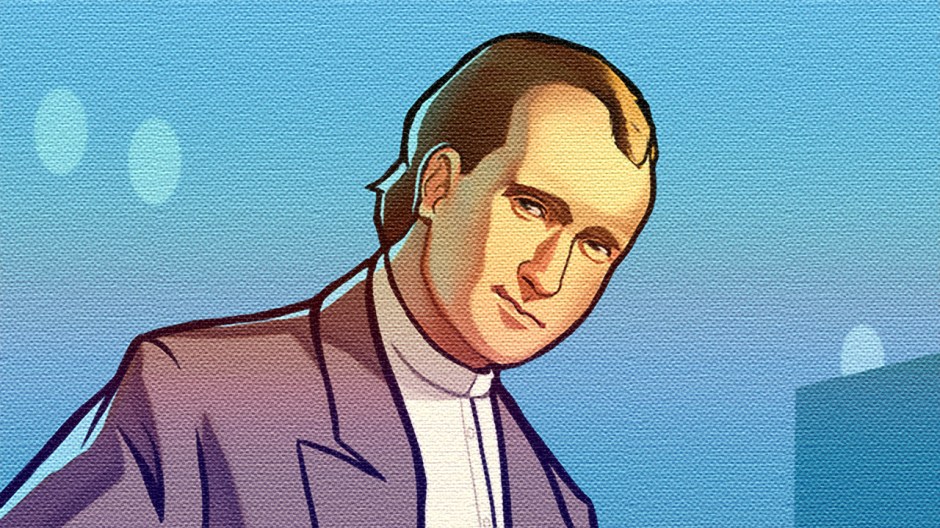
Phil Collins in Grand Theft Auto: Vice City Stories
There’s something bittersweet about getting to star in a series as massive as Grand Theft Auto, but turning up in a portable spin-off instead of one of the main entries.
Still, Vice City Stories on PSP (and later PS2) was a cracking little game nonetheless, no doubt because it was based on arguably the best GTA ever.
Given its ‘80s setting, the appearance of Phil Collins is a sensible one. Better still, he actually gets involved in a few missions.

First you have to grab a bulletproof limo and pick him up as he arrives in Vice City by helicopter, avoiding the hitmen out to kill him (his agent owes a crime boss millions, you see).
Then you have to head to the local stadium, where he’s due to perform, and kill the assassins waiting there to make sure the venue is safe for him.
Finally, at the concert you have to stop even more hitmen who are trying to sabotage the lighting rigs to kill Phil.
Your reward is a ticket that lets you watch the GTA version of Phil Collins perform In The Air Tonight. Which is probably worth it for the drum solo, let’s be honest.
Five unwitting singers in Celebrity Sports Showdown
We all remember the glory days of the Wii and how, at its peak, it was home to an onslaught of ‘party’ titles packed with dogshit mini-games.
If you thought it was bad going into a shop and seeing them, imagine how it was for the Staff Writer / Games Editor of the Official Nintendo Magazine at the time, having to play all this guff. Actually, hang on, that was me.
One key example has somehow been forgotten by most despite its sheer strangeness. In 2008 EA decided to release a party game under its wacky ‘EA Sports Freestyle’ label (previously EA Sports Big) and called it Celebrity Sports Showdown.
The premise was as straightforward as it was nonsensical: hey, here’s a bunch of sporting challenges, and let’s have some famous sporting celebrities play them. Oh, and let’s have some musical celebrities join in too, for literally no fucking reason.
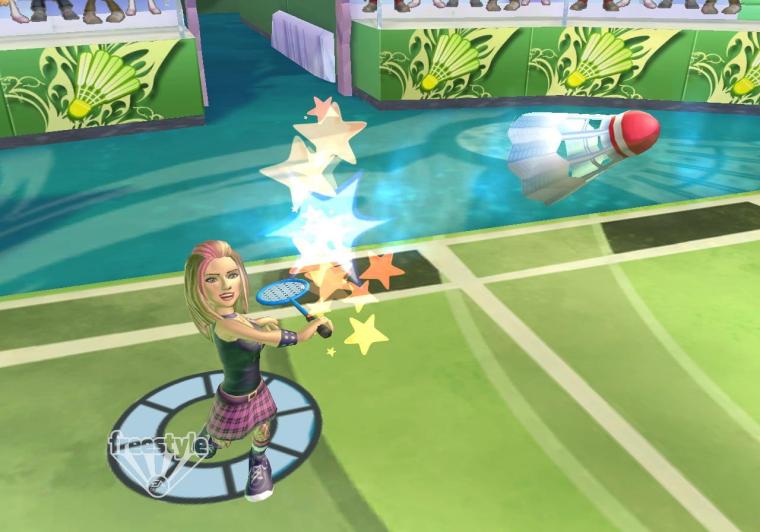
I have no issue with the sporting stars. Basketball player Paul Pierce, women’s football legend Mia Hamm, figure skater Kristi Yamaguchi, NFL running back Reggie Bush and boxer Sugar Ray Leonard all made sense in the context of a sports game, even if the events included beach volleyball and ‘rapid fire’ archery.
But if anyone on this planet thinks they can explain why there was also a need to include Avril Lavigne (the first one), Fergie from the Black Eyed Peas, LeAnn Rimes, Keith Urban and Nelly Furtado, they’re a stinking liar.
They didn’t even get the celebs in question to record dialogue for their characters: it’s as if EA had made a generic sports game, realised it was a bit shit and decided to replace the character skins with famous faces to help sales. In fact, that’s almost definitely what happened.
I’m going to be covering this one in more detail at a later date, watch this space.
David Bowie in Omikron: The Nomad Soul
Omikron (known just as The Nomad Soul in North America, where it sold about three copies) was the first game developed by David Cage’s Quantic Dream, which became known for the likes of Fahrenheit, Heavy Rain, alleged sexual and racist behaviour in the workplace and Detroit: Become Human.
Like other Quantic Dream games it’s an ambitious adventure which aims for complete player immersion, though unlike the games that followed it there’s less focus on QTE sequences.
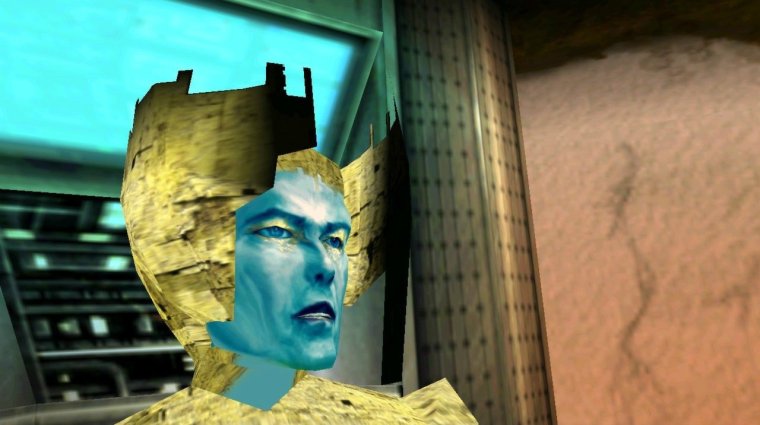
Instead, its main gimmick is that any time you die, you possess the soul of one of the other 40-odd NPCs found in the game world: take that, Watch Dogs: Legion.
Most notable, though, was the involvement of the legendary David Bowie. Not only did the musical icon compose 10 new tracks for the game’s soundtrack, he also lent his likeness to two of the game’s characters: an unfortunately named super-being called Boz, and the lead singer of a band who can be seen playing in various areas in the game.
Keeping it in the family, Bowie also managed to wangle it so that his wife, fashion model Iman, also appeared in the game as one of those playable NPCs.
Fred Durst in a couple of WWF games
Nothing defines the turn of the millennium better than Limp Bizkit and its red cap rocking, bumfluff-bearded frontman Fred Durst.
Love him or hate him (and for many it was the latter), young Frederick was the face of ‘nu metal’, with hits like Rollin’, Nookie, My Way and My Generation ensuring the band remained successful for at least a few years.
Ever keen to get involved in the latest craze, WWE (then known as WWF) also involved Limp Bizkit heavily in its programming.
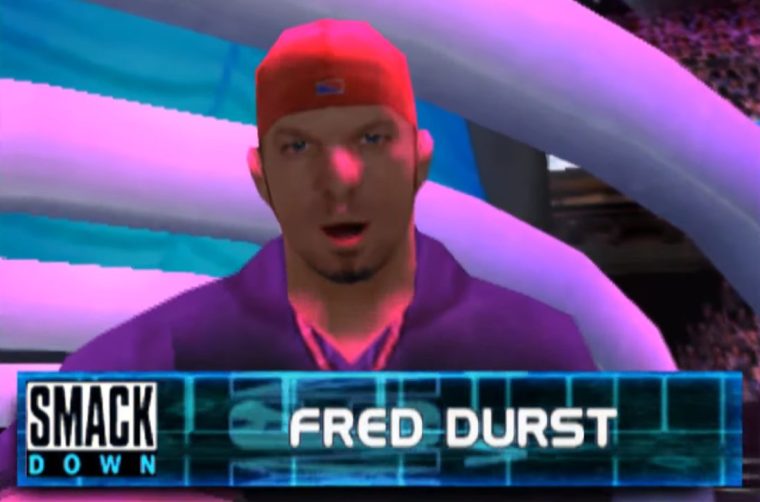
Its music was used in some of its promotional packages (including the greatest one ever made), and more notably Rollin’ became the theme song for The Undertaker.
This all came to a head in 2001 with the release of WWF SmackDown: Just Bring It!, the third game in THQ’s popular SmackDown series and the first on PS2. In that, Fred Durst can actually be unlocked as a playable wrestler, even though physically he was about as tough as hummus.
A year later, he then featured in the Xbox exclusive WWF Raw, once again as an unlockable fighter. Raw was unique in that it offered nearly 180 different weapons(!) to use on your opponent, meaning critics of Mr Durst would have been in their element.
A shitload of rappers in the Def Jam trilogy
Speaking of wrestling, the greatest wrestling game ever made is THQ and AKI’s legendary Nintendo 64 title WWF No Mercy.
Although THQ foolishly decided it no longer required AKI’s services after the release of No Mercy, that didn’t mean the series was dead. AKI took its engine over to EA, who bizarrely said: “Hmmm. Let’s make a wrestling game… but with rappers in it.”
The result was Def Jam Vendetta, a grappler that used the No Mercy engine (albeit a faster version) but replaced the likes of The Rock and Stone Cold Steve Austin with artists from the Def Jam Recordings stable.

There are 13 rappers in total (joining a bunch of generic fighters), meaning you can boot rump as the likes of DMX, Ludacris, Funkmaster Flex, Redman or Wu-Tang Clan members Method Man and Ghostface Killah.
The sequel Def Jam: Fight For NY ditched the ring but kept the same mechanics, adding a bunch of new rappers to bring the roster up to 67. Step forward Flavor Flav, Busta Rhymes, Ice-T, Snoop Dogg, Xzibit, Warren G and even some women including Lil’ Kim and… um, Carmen Electra for some reason.
Most folk forget the third game, Def Jam Icon, but that’s because it was a bit shit. So let’s not worry about that.
The Beastie Boys in NBA Jam (twice)
NBA Jam is known for its high-flying, over-the-top basketball action and its love of all things crazy: one minute the basket’s being set on fire, the next the backboard is shattering into a thousand pieces.
That’s not all it’s famous for, though. Ever since the first game in the series launched back in 1993, each entry has included a whole host of secret characters.
These range from developers who worked on the game, to characters from other Midway games like Mortal Kombat, to actual celebrities.

NBA Jam Tournament Edition was an updated version of the first game which included a bunch of new characters, including a few musicians. As well as both DJ Jazzy Jeff and the Fresh Prince (Will Smith), you could also unlock all three members of the Beastie Boys.
A full 16 years later when EA rebooted NBA Jam for the Wii (it came to 360 and PS3 later), it once again got some hidden players, including entire teams full of Democrats and Republicans: Obama and Clinton vs Bush and Palin, anyone?
Best of all, just to pay tribute to the good old days, the Beastie Boys returned once again for some b-ball hijinks.
Snoop Dogg in True Crime: Streets of LA
In the early 2000s, the huge success of Grand Theft Auto III influenced countless other open-world crime games all trying (and usually failing) to replicate Rockstar’s magic formula.
One of the better efforts was True Crime: Streets of LA, which turned the tables slightly by having you play as a detective instead of a criminal.
It also included a supporting role from one Mr Snoop Dogg – aka Snoop Doggy Dogg, aka Snoopzilla, aka Snoop Lion, aka DJ Snoopadelic, aka Smooth Dogg – who appears in some missions.
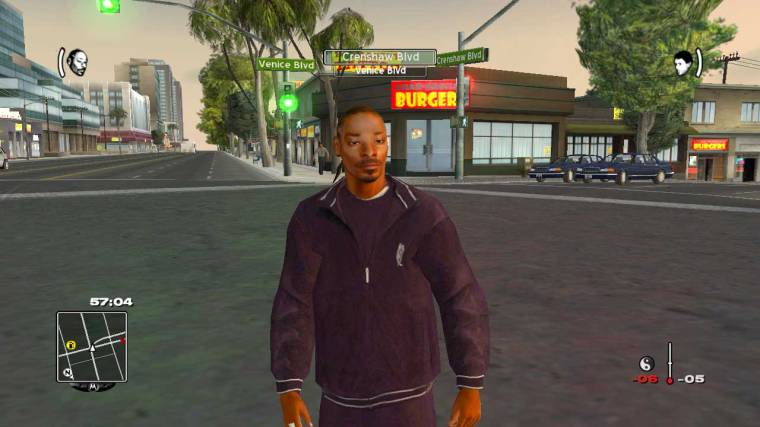
What’s more, if you collected 30 dog bones hidden throughout the game’s map (or entered a cheat code) you could unlock the Doggfather as a playable character.
Streets of LA was popular enough to spawn a sequel, True Crime: New York City, which followed in its predecessor’s footsteps by featuring another rapper, Redman.
A third game provisionally known as True Crime: Hong Kong was all but finished before Activision scrapped it, but not before Square Enix picked it up and released it as Sleeping Dogs.
Various rappers in RapJam: Volume One
Fancying a piece of the NBA Jam pie, Motown Records decided to make its own basketball game and released it under its short-lived Motown Games label.
RapJam: Volume One (there was no Volume Two) offered street basketball with a twist: all 18 playable characters are real-life rappers.
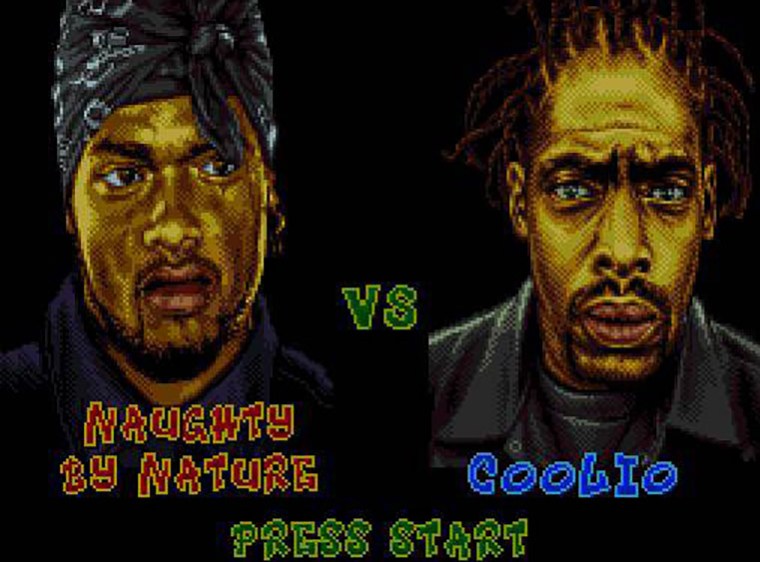
Yes, you too could finally shoot some hoops as Coolio, LL Cool J, Queen Latifah, Warren G, Yo-Yo or any of the members of House of Pain, Naughty by Nature, Onyx or Public Enemy.
The idea was a sound one in theory: with more urban legends than an all-night campfire story session Motown hoped that fans of each artist would buy the game to play as them.
Unfortunately, Motown forgot one tiny detail, and seemingly missed the bit in its checklist that said “don’t make the game a big bucket of wank”.
Avenged Sevenfold in Call of Duty: Black Ops II
The ninth game in the Call of Duty series has a fairly deep and serious story.
It’s set during two different time periods – the late ‘80s and 2025 – and continues both the story of two of Black Ops’ protagonists, and that of one of their sons.
It involves drug cartels, kidnap attempts, cyberwarfare, arms dealing and the eventual outbreak of the second Cold War.

It’s all pretty heavy stuff, which is why it makes perfect sense for the end credits to show two of the game’s characters performing on stage with metal band Avenged Sevenfold.
Oh, and obviously don’t pay attention to the fact that one of those characters is actually Raul Menendez, the game’s main villain who hacks drones and uses them to attack major American and Chinese cities, and is referred to in the game as “the most dangerous terrorist since Osama bin Laden”.
As long as the lad knows how to play an axe, that apparently doesn’t matter.
Insane Clown Posse in Backyard Wrestling
With THQ in possession of the WWE licence, anyone else who wanted to make a wrestling game would either need to go with fictional characters or think outside the box a little.
Eidos decided to go with the latter option, and came up with Backyard Wrestling: Don’t Try This at Home, a wrestling game based on the growing popularity of kids with camcorders filming their own matches in their gardens.

To give the game a little name value, Eidos enlisted the help of rap duo the Insane Clown Posse, who at the time were running their own independent comedy wrestling circuit called JCW (Juggalo Championshit Wrestling).
As such, while its 31-strong roster did indeed include a bunch of completely fictional characters, it also let players choose from ICP themselves – Shaggy 2 Dope and Violent J – as well as their rapper chums Twiztid and various other JCW wrestlers.
Granted, there were a couple of legit wrestlers chucked in there for fun too: Sabu and Da Bone Doctor (better known as The Godfather) were included to keep wrestling fans happy. It didn’t really matter, though, because the game was a load of old sack.
Various rockers in the Tony Hawk series
Over the years, no fewer than nine music-based guests have appeared as secret unlockable characters in the Tony Hawk series of skateboarding games.
It all kicked off in Tony Hawk’s Pro Skater 4, with the inclusion of an Iron Maiden song in the soundtrack leading to the ability to unlock the band’s mascot Eddie.
The following year, Tony Hawk’s Underground let you unlock KISS’s Gene Simmons, as well as a new stage set around a KISS concert.
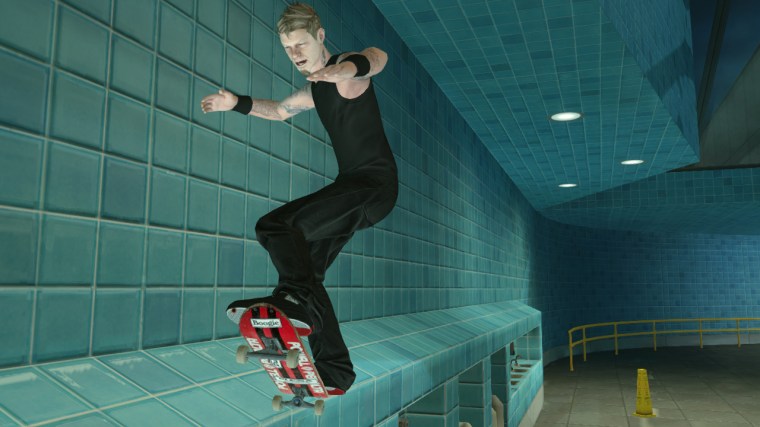
2005’s Tony Hawk’s American Wasteland included Billie Joe Armstrong from Green Day as well as rapper Lil Jon, while 2007’s Tony Hawk’s Proving Ground featured MCA from the Beastie Boys.
An HD remake of the original game launched in 2012 and added Metallica members James Hetfield and Robert Trujillo as DLC characters.
And spare a thought for Lil Wayne and Tyler the Creator, who were the unlockable musicians in the atrocious Tony Hawk’s Pro Skater 5, the comeback everyone wanted but ultimately regretted.
Fred Durst (again) in Fight Club
Finally, if beating Fred Durst in a wrestling ring a couple of times wasn’t enough to get it all out of your system, there was another more violent way to kick his head in.
The Fight Club game was released five years after the movie, but that doesn’t mean the developers were doing a GoldenEye and improving its quality by not rushing it to launch alongside the film.
It just means that a few years after the film came out, Vivendi Universal thought: “Folk are still talking about Fight Club, so let’s make a game about that. And let’s make sure the combat is as shallow as a paddling pool Kenny Baker’s pissed in.”
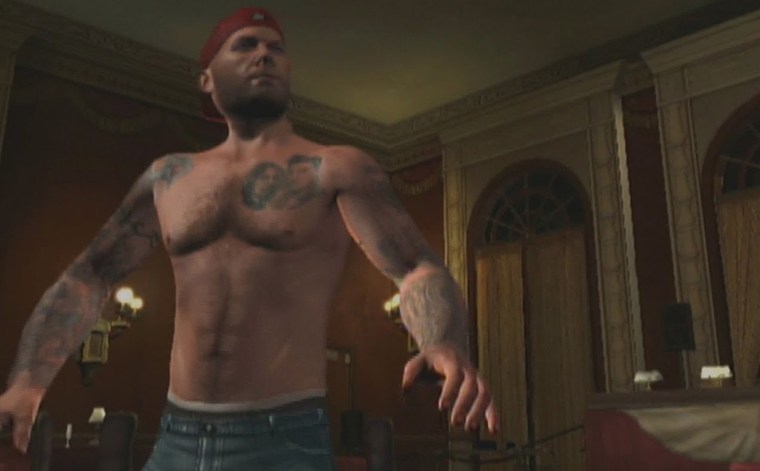
If you fought your way through the game’s Arcade mode and completed it as every character, you would unlock Abraham Lincoln as a playable fighter (a reference to a single line in the film).
However, if you take on the fairly rubbish Story mode and beat that, you’ll unlock Fred Durst, meaning you can finally finish the job you started in the WWE games and boot the utter shite out of him.
If you enjoyed this and other articles and want to help me write them more frequently, please consider donating to my Patreon account.
Don’t want to commit to a regular payment? I’ve now got a PayPal ‘tips’ jar: if you like what you read feel free to chuck yer man Scullion a couple of quid here or there and help stock up my Irn Bru fund so I can continue working away like a bastard.

Alternatively, if you can’t afford to support me on Patreon, please do your normal Amazon UK shopping via this link or Amazon US shopping via this link. Tired Old Hack is a participant in the Amazon Services LLC Associates Program, an affiliate advertising program designed to provide a means for me to earn fees by linking to Amazon.co.uk and affiliated sites.




 Tired Old Hack